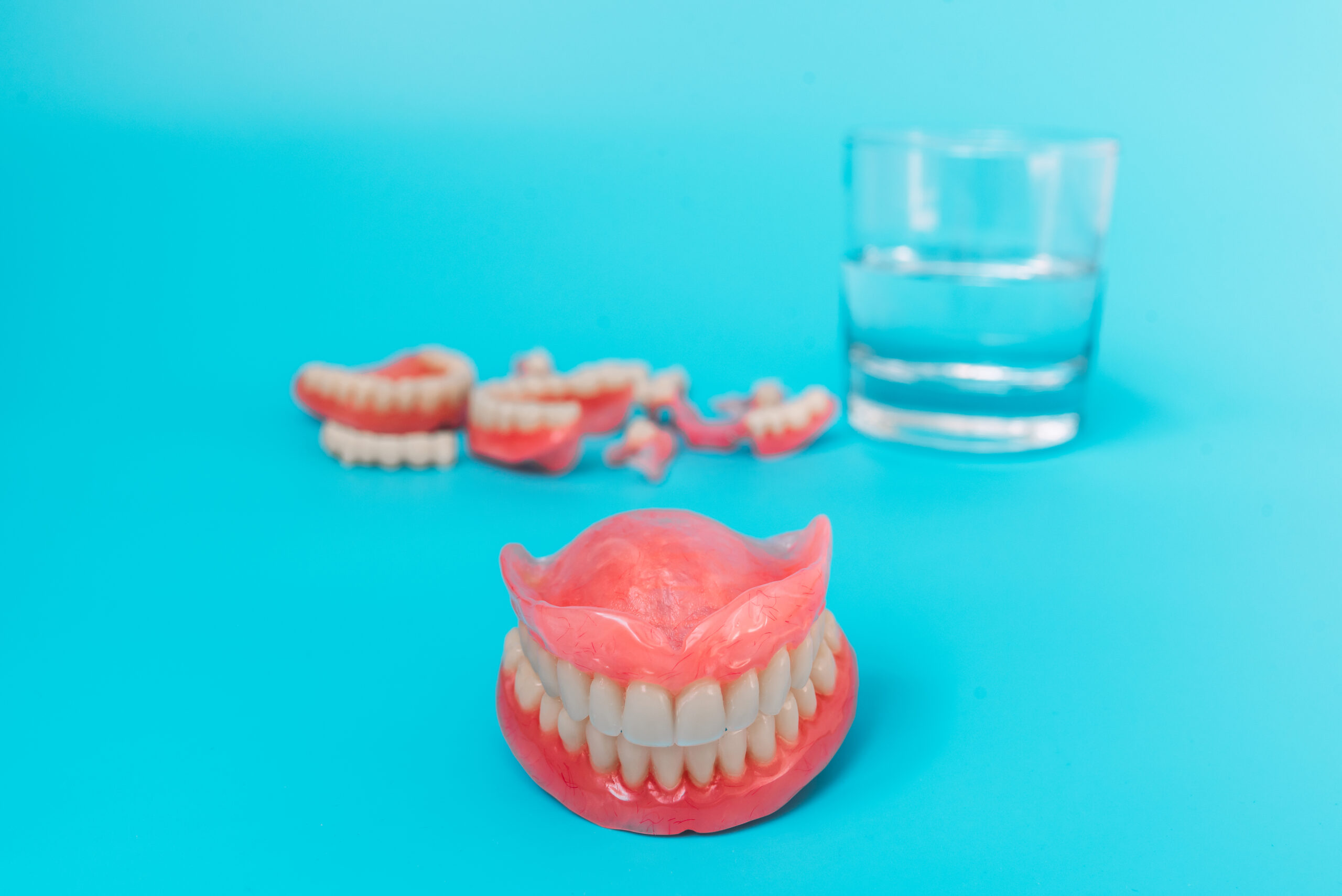
Getting used to new dentures can feel like a big adjustment.
Your gums and jaw must adapt to the shape, pressure and movement of dentures.
It’s completely normal to experience soreness, irritation or frustration during the first few weeks.
With the right care and a few helpful tips, though, you can make the transition much more comfortable.
In this article, we’ll cover how to help your dentures fit more comfortably, why irritation happens, which materials can cause it, and what to do if the discomfort continues.
How to make dentures fit more comfortably
These steps help reduce early soreness and improve day-to-day comfort.
Allow time for adjustment
Gradually increase the wear time of your dentures, starting with short periods so that your gums and jaw can adapt without excessive pressure.
Use denture adhesive
A small amount of denture adhesive can help stabilise the denture.
Reduced movement lowers the risk of rubbing and irritation.
Choose soft foods
Start with soft, easy-to-chew foods including yoghurt, mashed potatoes and eggs.
Cut food into smaller pieces and chew on both sides to keep the denture balanced.
Practice speaking
Reading out loud or talking in front of a mirror will allow your tongue and cheek to learn new movement patterns.
This will help reduce the initial discomfort from denture movement.
Massage your gums
Gently massage the gums with a soft toothbrush or a clean finger.
This improves blood flow and helps toughen the tissue over time.
Rinse with saltwater
Saltwater is a natural antiseptic which soothes sores or tender gums caused by new dentures.
It will promote the healing of minor sores that occur from rubbing dentures and cleanses the mouth gently of bacteria.
What causes denture irritation?
Denture irritation has several common causes, most relating to fit, pressure or hygiene.
- A poor fit
Dentures which are too tight, loose or uneven can rub against the gums causing sores and inflammation.
- Sharp edges and rough spots
Dentures have rough or sharp edges from manufacturing or wear which can scratch or irritate the gum tissue.
- Sensitive gums
Some people have naturally more sensitive gum tissue which reacts strongly to pressure and friction.
- Improper wear or poor cleaning
Wearing dentures continually prevents the gums from resting.
Inadequate cleaning of dentures can lead to bacterial build-up which can cause irritation and infection.
- Denture adhesive issues
Using too much adhesive or applying it unevenly can create pressure points or trap food particles which cause irritation.
- Underlying oral health issues
Existing oral health problems such as gum disease, an oral infection, or poorly healed extraction sites can worsen irritation.
These conditions must be treated to allow dentures to settle.
Which denture materials can cause irritation?
Different materials interact with the gums in different ways.
Irritation depends on individual sensitivity and denture design.
Acrylic dentures
Plastic acrylic dentures can cause irritation if not polished or fit correctly.
Metal dentures
Nickel or cobalt components may trigger allergic reactions in sensitive individuals.
The metal clasps or frameworks can also rub against sensitive tissue if not fitted correctly.
Flexible dentures
Thermoplastic dentures can trap food and are generally more difficult to clean which can cause irritation or inflammation.
Porcelain dentures
Porcelain dentures can be hard and unforgiving, causing pressure spots on the gums if the bite isn’t properly balanced.
What to do if denture irritation persists
Most denture discomfort or soreness improves within a few days or weeks as your mouth adjusts.
Here’s what you should do if irritation persists:
Schedule a dentist visit
The dentist can trim, reshape or rebase the denture to relive pressure points as well as identify what is causing the irritation.
Check for sores and signs of infection
Look for redness, swelling or open sores in the mouth.
Contact your dentist immediately if you experience painful ulcers, bleeding or pus.
Use a dental adhesive
A small amount of dental adhesive will stabilise the denture and reduce rubbing.
Maintain good oral hygiene
Clean your dentures daily with a soft brush and denture cleaner to reduce bacteria and inflammation.
Consider the denture material
Irritation may be related to the denture material or design.
Consult your dentist, who may recommend switching to flexible dentures, metal frameworks or a softer acrylic.
Denture services at Grosvenor Dental Practice
Grosvenor Dental Practice provides a range of denture options, including acrylic, porcelain and metal designs.
Each denture is made to support your specific needs, restoring your smile and boosting your confidence.
Get in contact to schedule your free consultation today so we can identify the most suitable dentures for your oral health needs.